
If anyone asked me where I write, my answer would probably be: Elsewhere.
That might not be the kind of answer people are looking for. They probably want a literal description of my writing space. They want me to talk about the decor (pale blue wallpaper with a silver damask pattern) and the view (the tops of branches – right now bare and sparse, which is when I like them best – and, if I stand up, a view of the river).
The desk is white, and before I start work, I always try and clear it of anything that isn’t directly related to writing, particularly anything related to the-work-that-currently-pays-for-things. Some days I need it clutter-free, but today there are books piled all over, haphazard, sloppy piles, one even with pages from a first draft of my latest short story curling down over top of it. There are pens and pencils on the desk as well as my current writing notebook, and there is a phone, but the ringer is off, so it doesn’t disturb me when I’m writing. The window sill is wide enough for a few objects – a Jane Austen action fiction (so when any writing conundrum comes up, I can ask myself, What would Jane Austen do?) and also a piece of yellow paper all scrunched up, a reminder and talisman against extreme frustration and irrationality.
That is where I (physically) write, but it’s not what I really consider my writing space. When I’m writing, when I’m actually in that space where I’m doing the meaningful, honest work, I’m not really here in this room with a white desk and a crumpled up piece of yellow paper. I’m somewhere else. I’m in a space where I’m not consciously aware of what I’m doing, and yet, I’m working with absolute intent. It’s as if the work and I are so in harmony that the act is more important than the space. The Elsewhere.
It’s a tricky place to get to though. There’s a locked door, but the key I need to open it changes (it often seems) daily. And sometimes after I’ve tried fifteen, sixteen, seventeen different keys, I despair that maybe, maybe today will be the day that it stays locked against me forever.
And that’s when I often think of this passage from Margaret Atwood:
“you can work at a thing, and you can learn it….But only up to a point. Beyond that point comes the talent, which is a given. It’s there or it isn’t there, in varying quantities; it’s not reasonable or predictable or demandable, and it can be with you at one point in your life and then vanish.”
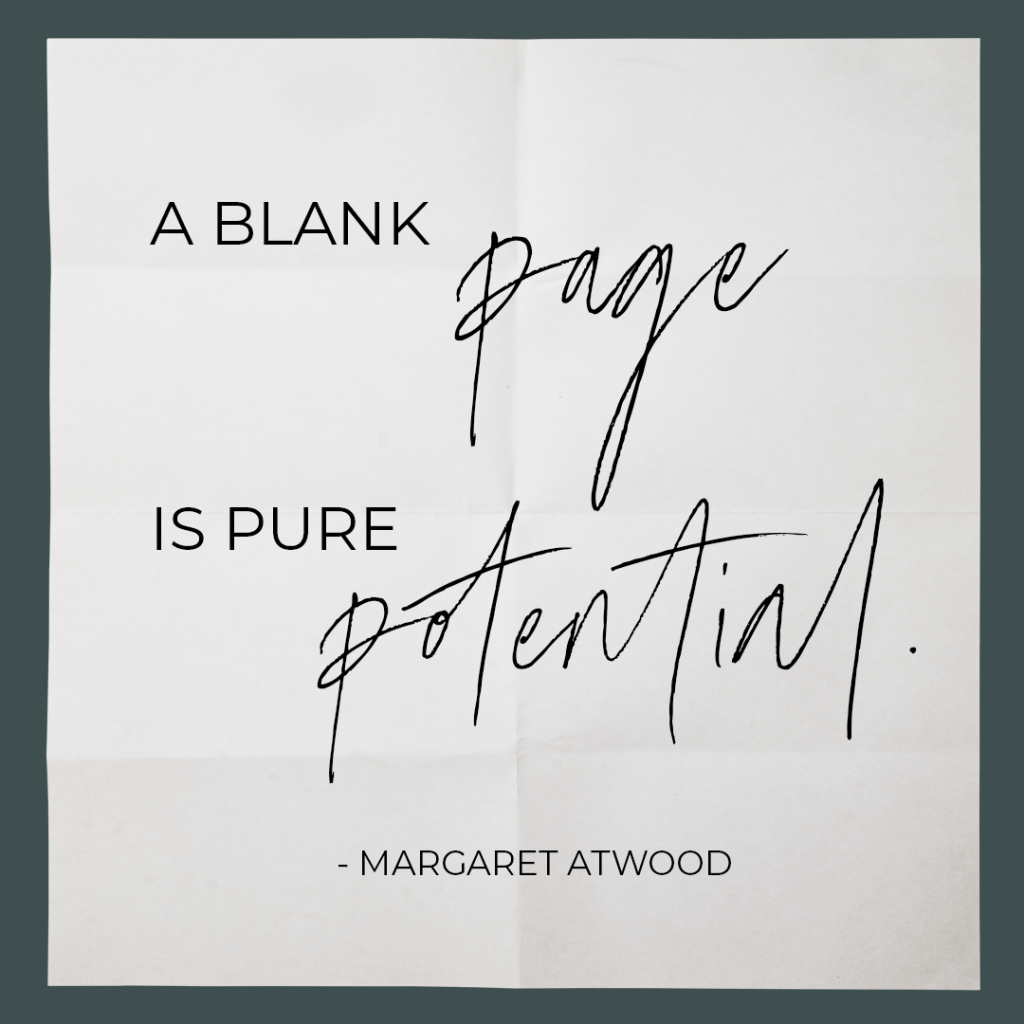
But that’s where faith comes in. I sit down, I open up the notebook, and I trust that today or tomorrow or the next day or even the day that, I can return to the Elsewhere. For as Margaret Atwood also says: “The blank page is always pure potential.”


 heather debling