
A few years ago, I had a meeting with one of the professors in my MFA program. We were meant to discuss an idea I had for a novel, but instead, we talked mainly about my process.
I’d just been at a craft session where a writer talked about how you should be writing, strongly advocating for Annie Lamott’s “shitty first draft” approach—an approach I know works for many writers but has never worked particularly well for me.
I knew by then that I work differently, that I do a lot more structure work upfront, outlining on a macro and then micro level before I really do much drafting. I knew by then that, for me, the words come later.
And yet as I sat an hour later with the professor and talked through my process, I could feel how the writing advice I’d just heard in that craft session was tingeing what I was saying about how I typically work, a kind of seeping in of—at best—tentativeness but really something closer to shame. The sense that my process wasn’t just different: it was wrong.
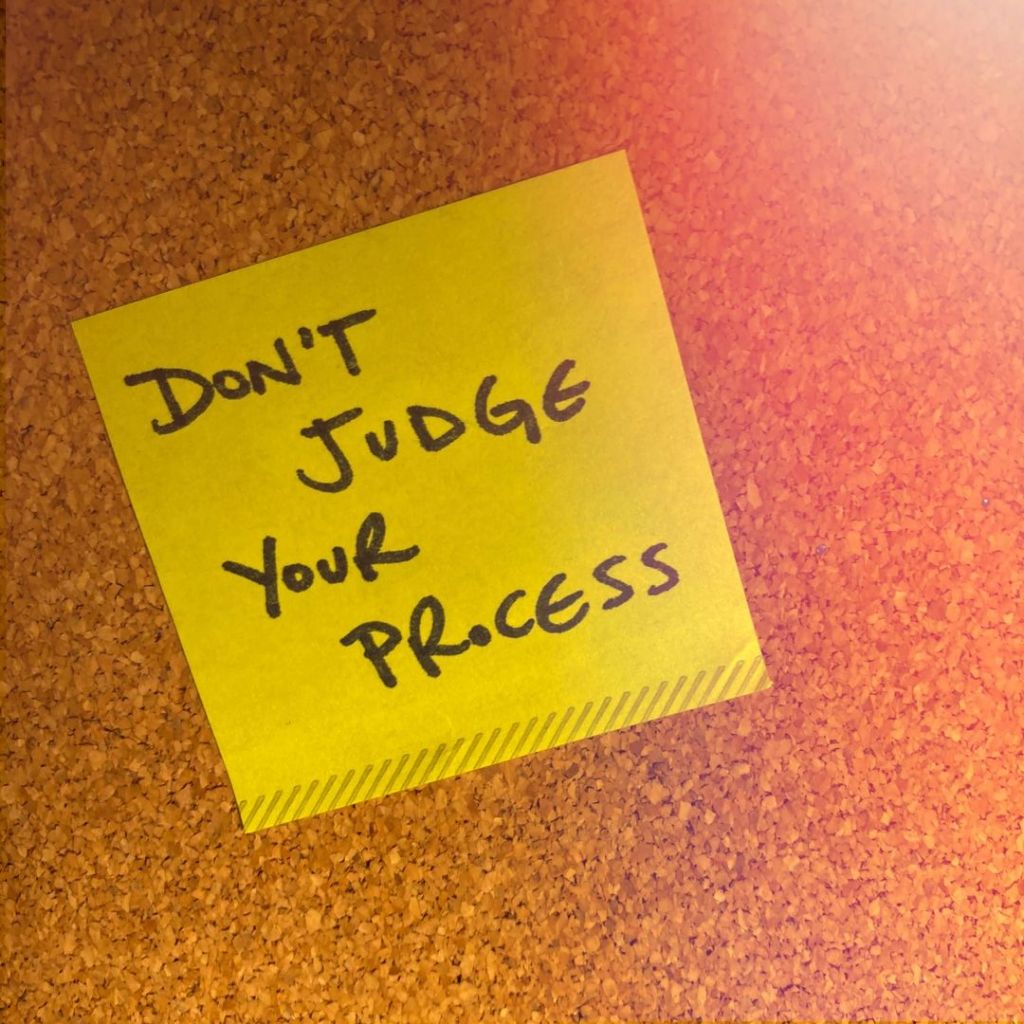
When I finished, the professor gave me one of the most useful pieces I’ve writing advice I’ve ever received. She said, “Don’t judge your process.”
I now keep those words on a post-it above my writing desk, a reminder to embrace what feels like my most natural way of working. To trust rather than judge my own unique process. To turn to craft for inspiration and sparks of insight but not for “shoulds.” To know that there isn’t one definitive right way of working that applies to everyone: there is only what feels right for me at this particular stage in my process.
And knowing how you work best doesn’t mean you can’t work differently. Your creative work and how you do that work is a process, and it can evolve and change and require different approaches at different points in that process or for different kinds of projects.
It’s about trying to bring the right kind of struggle into your process, the exploration and exercises and different ways of working that push you to grow and perhaps work different creative muscles, but with a spirit of curiosity, not judgement.
It’s also about balancing that exploration with a return to the familiar, to how you know you work best, whether that’s writing a very quick first draft or starting with a detailed outline, whether it’s writing every day or in intensive bursts every few months, or whether it’s writing to a specific word count each day or showing up to the page with no specific goal other than a simple and profound desire to connect.
It’s about trusting yourself, which can be the hardest and most necessary work of all.


 heather debling